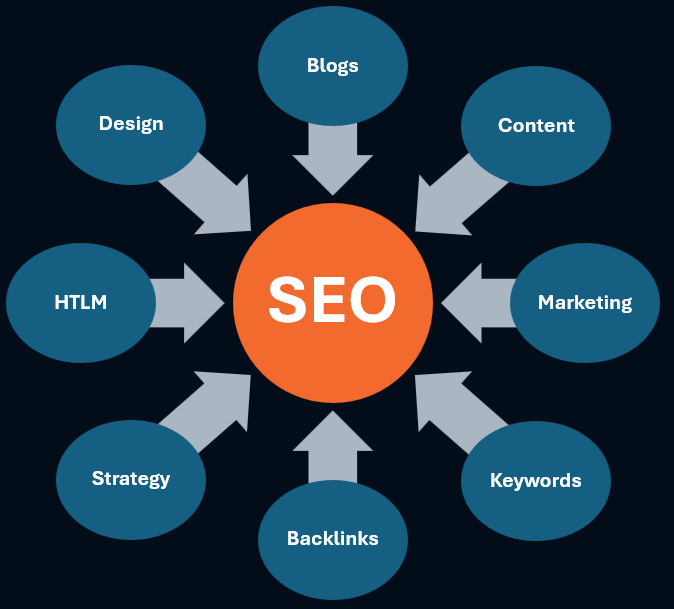
The Foundation of Digital Success:
Why SEO Matters
SEO, or Search Engine Optimization, is the practice of optimizing your website to rank higher in search engine results pages (SERPs), leading to increased visibility, organic traffic, and more customers by systematically refining content and improving technical performance to align with search algorithms.

What is SEO?
Search Engine Optimization (SEO) is how your business gets to the first page of Google—where over 90% of buyers make their decisions. If you’re not there, you’re not in the running.
SEO helps your company show up when engineers, field consultants, and procurement teams search for services you provide. By improving your website’s structure, content, and credibility, SEO signals to Google that your business is relevant and trustworthy.
The result? Higher rankings, more qualified inquiries, and more contract opportunities.
Why YOU Need an SEO Strategy
Without a strategy, your digital efforts are scattered and your SEO won’t gain traction. You may spend money on marketing without ever reaching the first page of Google — where over 90% of decisions are made. A strategy aligns your website, content, keywords, and analytics so Google recognizes your business as relevant, credible, and worth ranking. With a clear plan, every action drives measurable results — higher rankings, qualified leads, and more contract opportunities.
- Improved Website Visibility
- Increased Organic Traffic
- Higher Credibility and Trust
- Better User Experience
- Targeted Traffic
- Cost-Effective Marketing
- Measurable Results
- Long-Term Growth
Building an Effective
SEO Strategy
A strong SEO strategy starts with knowing what to rank for, who you’re trying to reach, and how Google evaluates your website. It’s the blueprint for getting your business on the first page — not just hoping it happens. With the right goals, keywords, structure, and ongoing optimization, SEO becomes a repeatable system that drives visibility, leads, and long-term growth.
Define Your SEO Goal
Start by identifying what success looks like for your business. This gives direction and ensures you’re measuring what matters.
Conduct Keyword Search
Find out what your ideal clients search for so you can align your content with real demand and intent.
Analyze Your Competitors
Audit your site and study competitors to see what’s working, what’s missing, and where you can outrank others.
Optimize Your Site Content
Use your research to improve content, structure, and on-page SEO so Google and users find you credible and relevant.
Implement Analytics
Set up tracking so you can measure traffic, rankings, conversions, and make decisions based on real data—not guesses.
Monitor, Adapt, and Improve
SEO isn’t set-and-forget. Continuously review performance and update pages to stay competitive and keep ranking.